Brandie Richardson
Every writer dreams of seeing their stories adapted for the big screen. With hits like HBO’s Heated Rivalry, it’s easy to imagine your book becoming the next breakout success story but unfortunately, that dream is exactly what scammers exploit. From unsolicited emails claiming Hollywood interest to fake production companies, these scams promise fame and fortune — but often end with empty pockets and stolen hope.
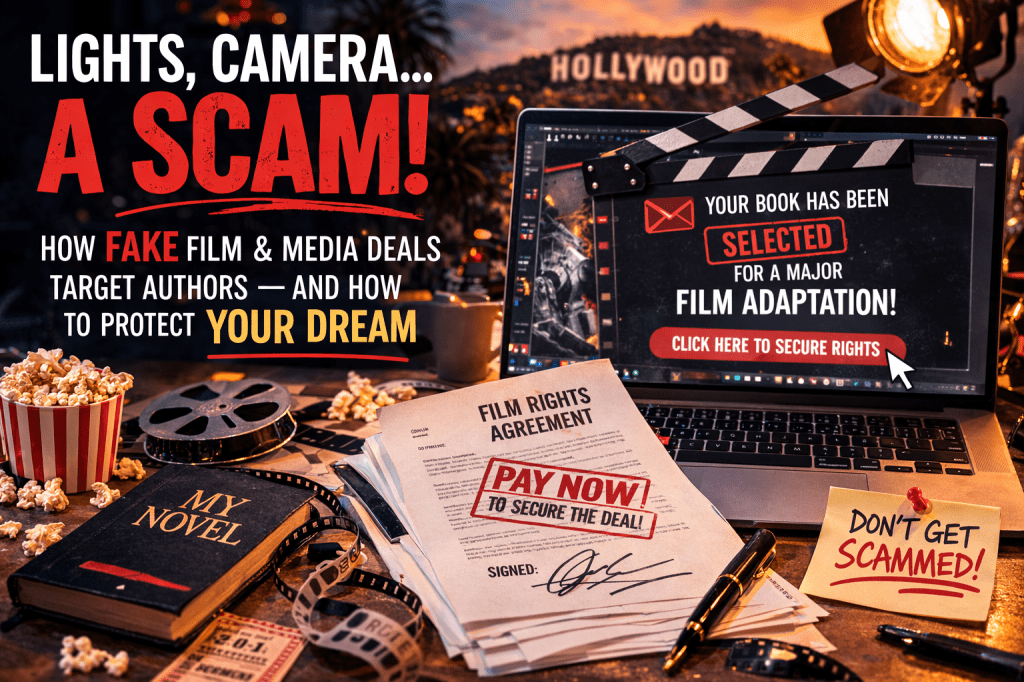
Image AI Generated
How the Scam Works
Scammers impersonate film producers, agents, or studio executives. They claim interest in:
- Optioning a book for adaptation
- Producing a short film or web series
- Selling rights for TV or streaming platforms
Then they request upfront fees for things like:
- Script consultation or conversion fees
- “Legal processing” for option agreements
- Promotional packages or festival submissions
Once payment is made, the scammer often vanishes, leaving no legitimate contact or deal.
Documented Cases
1. Hollywood Impersonation Scams
Authors Guild and Writer Beware have reported multiple cases where scammers used emails or phone calls to impersonate agents or producers associated with recognized studios. Authors are told they must pay fees to secure “contracts” or “option rights” — fees that can range from hundreds to tens of thousands of dollars. (authorsguild.org)
2. Community Reports
Reddit’s r/selfpublish has numerous firsthand accounts:
- One author received a detailed email claiming their book was selected for a feature film. The supposed agent asked for $500 to process contracts. The author confirmed the production company did not exist. (reddit.com)
- Another reported receiving a call from a “Netflix producer” who wanted to adapt their self‑published work. After a $2,000 “legal fee,” communication ceased. (reddit.com)
3. Pattern Consistency
Across all reports, scammers:
- Use urgent language (“You must pay within 48 hours to secure rights”)
- Provide official-looking documents, often with fake logos and letterhead
- Reference real Hollywood companies, but with slightly altered names
Why Authors Fall for It
- Excitement: The promise of fame and big money is irresistible
- Authority Illusion: Scammers include fake contracts, websites, and social media profiles
- Pressure Tactics: Urgency and exclusivity make authors act without proper verification
Even experienced authors can be caught off guard because these scams are polished and professional-looking.
Red Flags to Watch
1. Unsolicited Contact
Legitimate studios and agents rarely reach out cold to unknown authors.
2. Requests for Upfront Money
No legitimate studio or agent asks you to pay for options, scripts, or rights processing.
3. Slightly Off Company Names
Scammers often use names similar to real studios, e.g., “Netflicks Productions” instead of Netflix.
4. Lack of Independent Verification
Check the company and agent through multiple sources. If no legitimate records exist, it’s a scam.
5. Urgent Payment Demands
High-pressure deadlines for payment are never part of genuine media deals.
How to Protect Yourself
- Verify the studio or agent via official directories or LinkedIn.
- Ask for references or prior deals; confirm independently.
- Never pay fees to secure film rights or options.
- Consult a publishing or entertainment attorney before signing anything.
Scammers prey on authors’ dreams of seeing their work adapted. By recognizing the red flags – unsolicited offers, fake company names, and upfront fee demands – you can protect your creative work and your wallet.
 nomdeplumepublications.com